Intersections of Power, Memory and Transformation
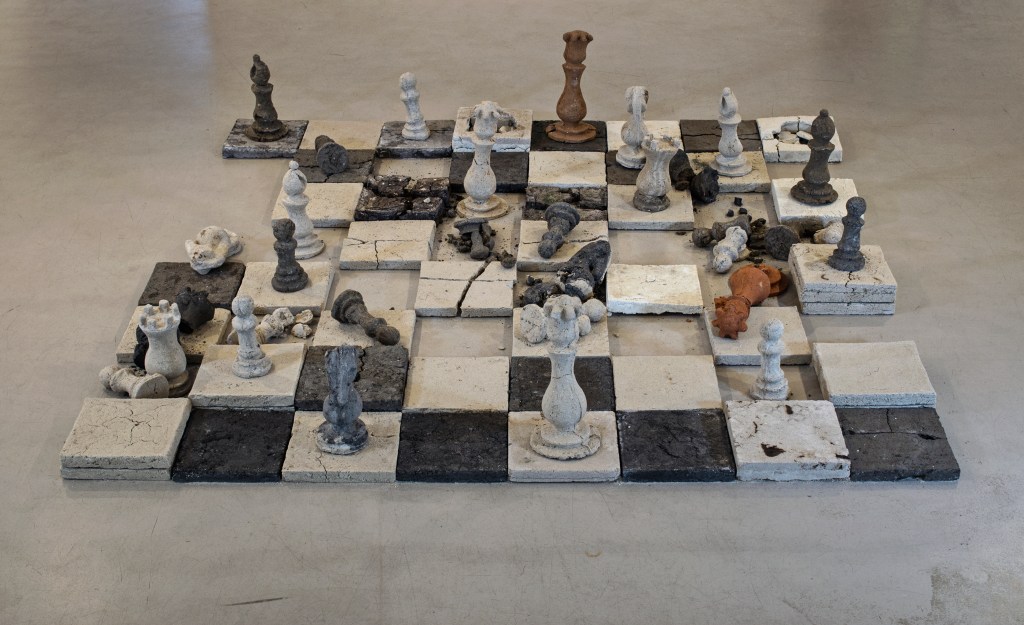
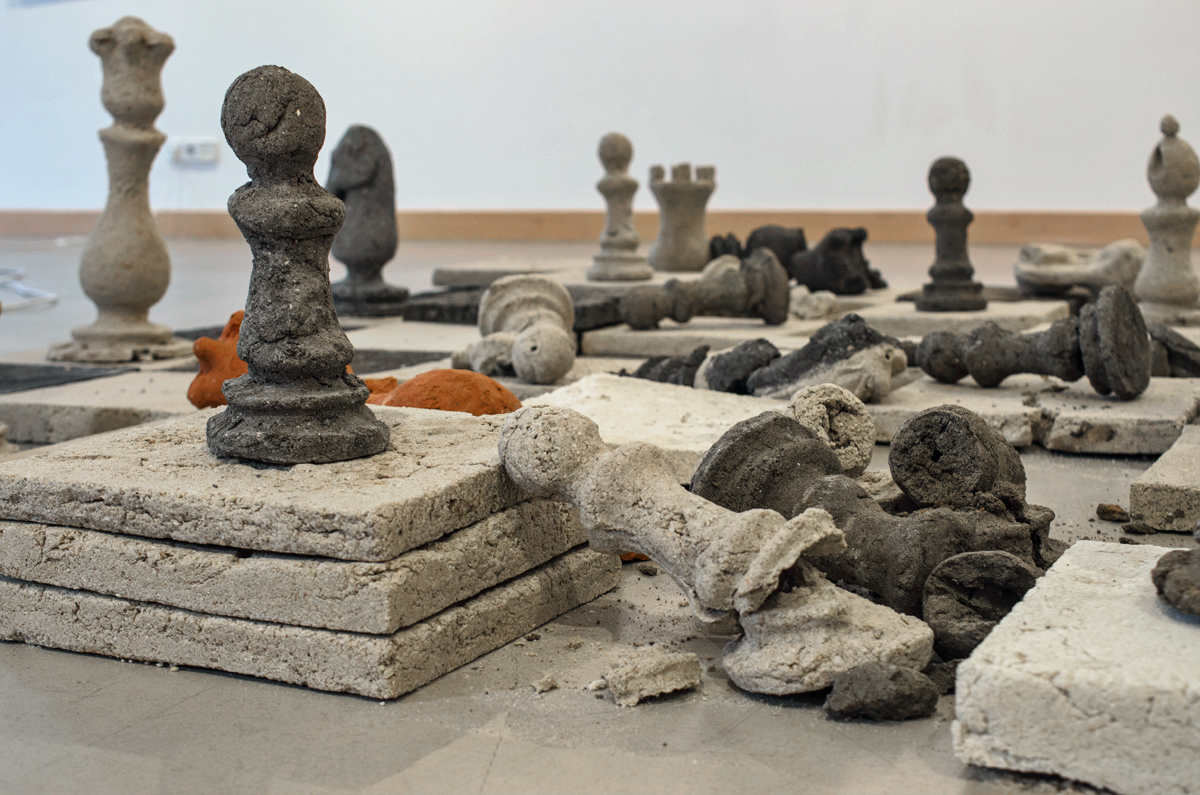
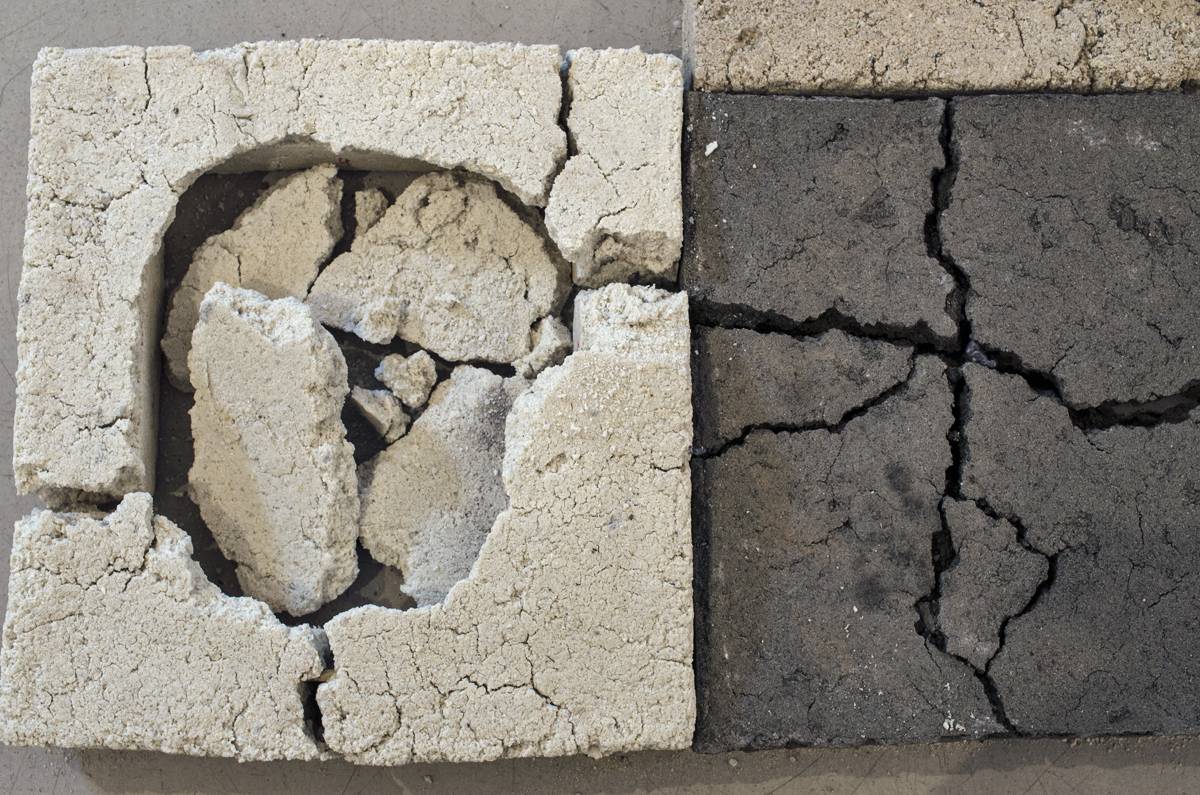
Merging Layers is a large-scale sustainable installation made from bioplastic and sand, created for the German-Namibian group exhibition Growing Together at Kulturhaus Karlshorst in Berlin. Combining postcolonial reflection, ecological material research and process-based installation practice, the work uses a chessboard as its central metaphor. What initially appears to be an ordered playing field of rules, hierarchies and strategic decisions gradually reveals itself as fragile and unstable. Squares are missing, pieces are damaged or broken, and the seemingly neutral order of the game becomes visible as a historically constructed system of power.
The chessboard functions as a metaphor for global power relations, colonial continuities and social inequality. The light squares and pieces refer to dominant Western systems, economic centres of power and colonial influence. The dark squares and pieces represent Namibia, countries of the Global South and social structures that have been shaped, weakened or disrupted through colonialism, apartheid, economic dependency and cultural displacement. Rather than focusing solely on who participates in the game, the installation asks a more fundamental question: who created the rules, who benefits from them, and who pays the price?
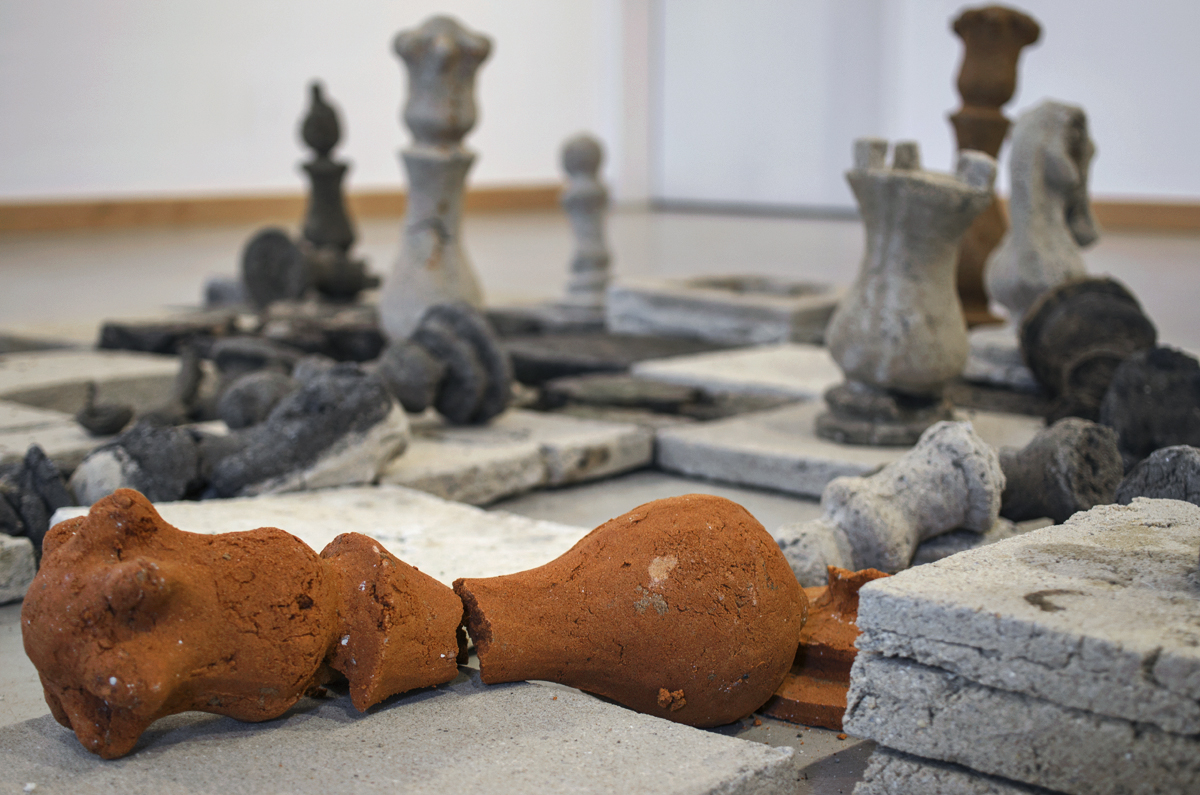
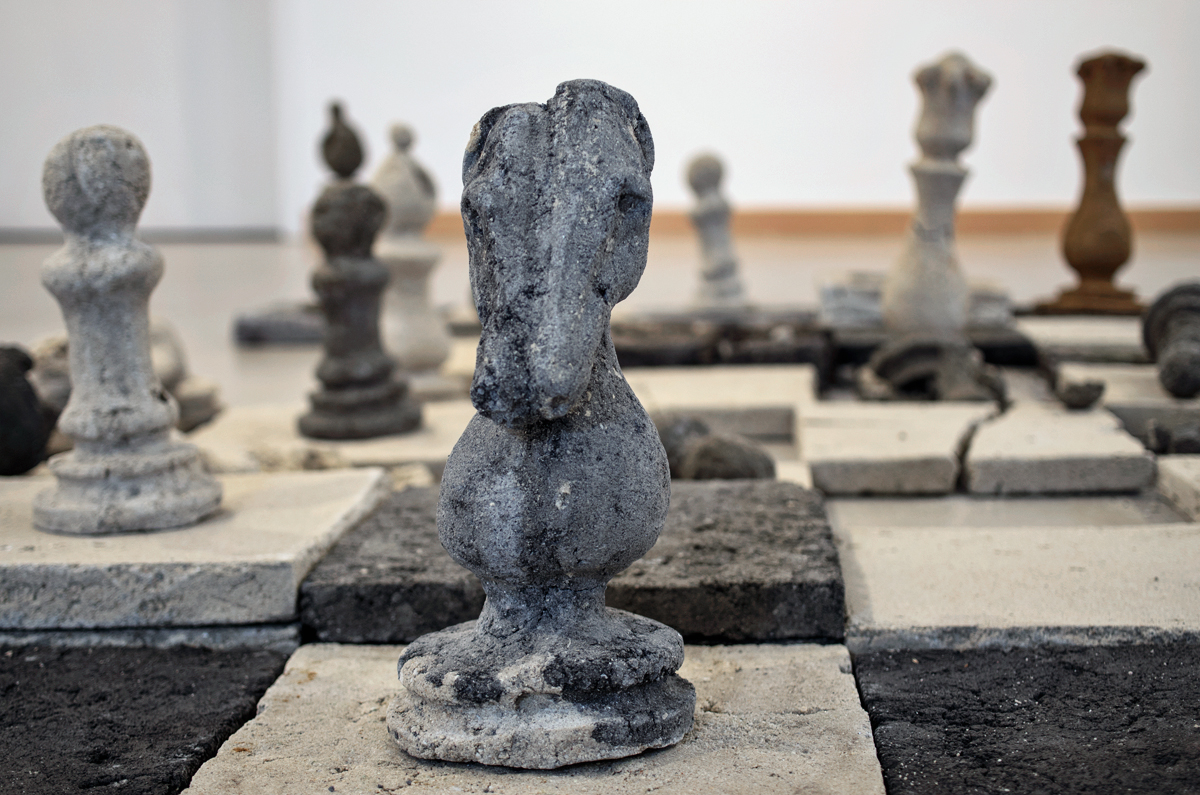
Particularly significant are the damaged pawns. They symbolise people with limited social, political or economic power. Within the logic of chess, pawns are expendable. They are moved forward, sacrificed and replaced. In Merging Layers, they become carriers of a social narrative. Exploitation, corruption, manipulation and structural inequality affect those with the fewest resources first. Through this shift, the work redirects attention from abstract political systems toward lived experiences of vulnerability.
The multicoloured figures introduce another dimension. They represent people who move between cultures, value systems and social realities. These figures embody mediation, translation, empathy and the possibility of transformation. Yet they remain deliberately ambiguous. Intermediary positions may facilitate solidarity and understanding, but they can also be instrumentalised by existing structures of power. Rather than offering simple solutions, the work exposes the tensions that shape contemporary societies.
A significant intervention is the replacement of kings with two queens. Traditional patriarchal rulers disappear and are replaced by figures capable of occupying multiple forms of power simultaneously. Positioned opposite one another, the queens create a permanent moment of decision: conflict or cooperation, retreat or engagement, destruction or transformation. In this context, the artist’s statement that “wealth has no gender” opens the work to questions of gender, authority and responsibility while maintaining its focus on economic inequality.
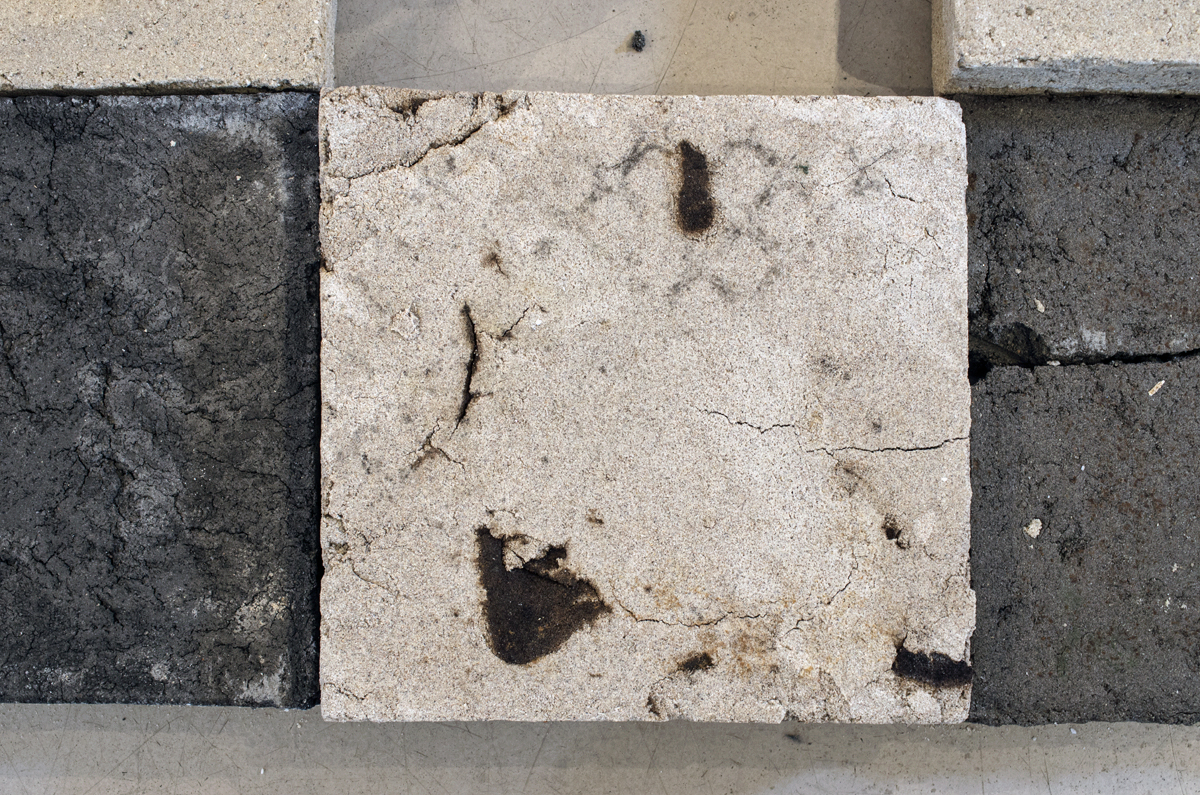
Material and process are not merely vehicles for meaning but integral parts of the work itself. Merging Layers consists of self-developed bioplastic, sand from Brandenburg and red desert sand from Namibia. After the exhibition, the installation was relocated to a public outdoor site near Kulturhaus Karlshorst. There, the planned process of biological decomposition could begin. Rain, weather and time became collaborators in the work. The figures gradually dissolved, and the different layers of sand slowly merged. What had initially appeared as fixed oppositions became unstable, creating new forms and relationships. The political metaphor transformed into a material process of change. History, the work suggests, is never static. It erodes, shifts and accumulates in new layers.
This relationship between concept and material gives Merging Layers much of its poetic force. The installation addresses colonialism, apartheid, white privilege, poverty, wealth, development aid, dependency and decolonisation without merely illustrating these subjects. Instead, it translates them into a vulnerable material landscape. Cracks, distortions and eventual disintegration make visible how political and economic systems leave traces on bodies, communities, landscapes and collective memory.
The work has been discussed in several publications. In the article Kunst zwischen Namibia und Deutschland (Art Between Namibia and Germany) by Magda Geisler, published in Der Freitag (2020), Merging Layers is presented within broader discussions of identity, belonging, colonialism, privilege and intersectionality. The installation is described as a reflection on historical power structures and their continuing impact on contemporary social realities. A further review appeared in the Namibian newspaper article Wie Kunst verbindet (How Art Connects), which highlights the work’s use of chess as a metaphor for unequal social conditions and global systems of power.
Within Kirsten Wechslberger’s wider artistic practice, Merging Layers occupies a key position. It brings together several recurring areas of research: postcolonial memory, social inequality, ecological responsibility, material cycles, cultural hybridity and the relationship between individual agency and larger political and environmental systems. The installation reflects a broader practice that investigates how identities, communities and ecosystems are shaped through historical processes and contemporary structures of power.
Art historically, Merging Layers can be situated within installation art, eco art, sustainable art, conceptual art, postcolonial art and process-based practices. It shares affinities with artistic approaches that understand artworks not as fixed objects but as evolving systems shaped by time, context and interaction. The work begins inside the exhibition space but deliberately extends beyond it. Only through exposure to weather and natural processes does the concept reach completion. In this sense, impermanence is not a limitation of the work but one of its central methods of inquiry.
Ultimately, Merging Layers is not only a work about damaged systems. It is equally concerned with the possibility of new formations. What disintegrates does not disappear entirely. It becomes sediment, trace and foundation for something else. The installation asks whether more just forms of coexistence can emerge from histories marked by inequality and conflict. Its political strength lies not in proposing a definitive answer but in making visible the fractures through which transformation becomes imaginable.
 Kirsten Wechslberger